Could air pollution increase type 2 diabetes risk in India? Explore emerging research linking long-term PM2.5 exposure with metabolic health.
India is fighting two public health battles simultaneously. One is against a diabetes epidemic that has placed millions at risk of long-term complications. The other is against air pollution, which has become an increasingly persistent feature of life across its cities. We discuss these crises in separate conversations, with different experts, policies and prevention strategies. But what if they are not as separate as we think?
Emerging research is beginning to point towards a possible connection between long-term exposure to fine particulate matter (PM2.5) and the risk of developing type 2 diabetes. This raises an important question for India that could prolonged exposure to polluted air be contributing to the country’s growing burden of diabetes and other metabolic health challenges?
The scale of this question becomes particularly significant when viewed against India’s diabetes burden. The ICMR-INDIAB study, published in The Lancet Diabetes & Endocrinology in 2023, estimated that 101 million people in India were living with diabetes in 2021, with another 136 million having prediabetes. The disease has traditionally been understood through familiar risk factors, including unhealthy diets, physical inactivity, obesity, urbanisation and genetic susceptibility. However, the growing body of research on environmental risk factors suggests that the conditions in which people live may also deserve greater attention in diabetes prevention.
A recent systematic review, APEX-T2D (Association Between PM2.5 Exposure and Type 2 Diabetes Across the Cardiovascular–Kidney–Metabolic Continuum), published in the Journal of Vascular Diseases in October 2026, offers important evidence to advance this discussion. The umbrella review examined 13 systematic reviews and meta-analyses covering more than 200 million cumulative participant observations. Its principal finding was that long-term PM2.5 exposure was associated with a 10–16% higher relative risk of developing type 2 diabetes for every 10 micrograms per cubic metre (μg/m³) increase in exposure. These findings are significant, but they warrant careful interpretation as the research establishes an association, not proof that pollution directly causes diabetes.
When does air pollution become a metabolic health concern?
PM2.5 particles are particularly concerning because their small size allows them to penetrate deep into the lungs. PM2.5 refers to fine particulate matter measuring 2.5 micrometres or less in diameter. These particles can enter the respiratory system and are associated with a range of adverse health effects. Research suggests that exposure may trigger systemic inflammation, oxidative stress and endothelial dysfunction, potentially interfering with biological processes involved in glucose regulation and insulin signalling.
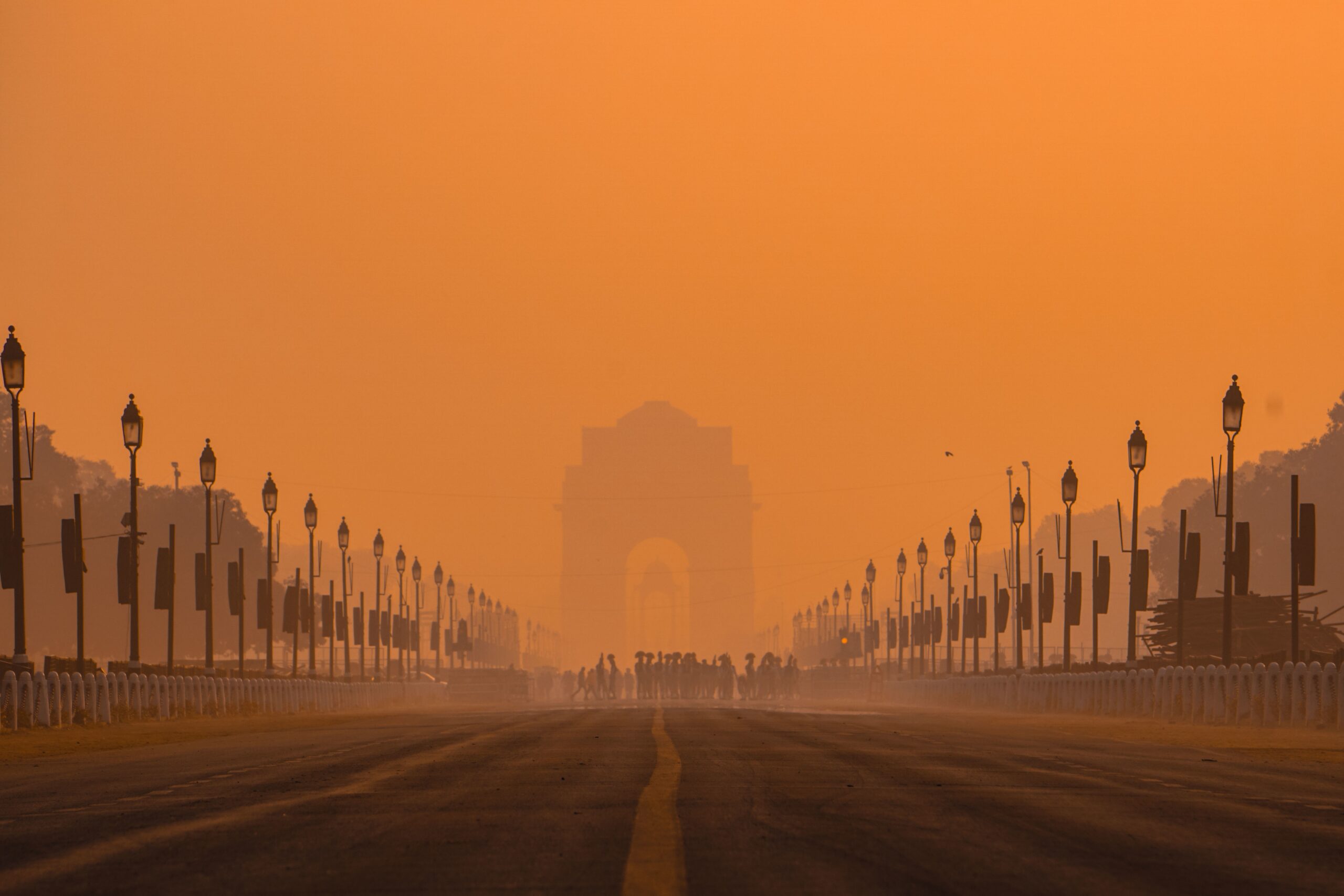
The concern is particularly relevant in India, where high levels of particulate matter exposure coincide with a substantial and growing diabetes burden. According to the Commission for Air Quality Management, Delhi recorded an annual average PM2.5 concentration of 97 μg/m³ in 2025. This is almost 20 times the World Health Organization’s annual guideline of 5 μg/m³.
For someone living in Delhi, pollution is part of the environmental exposure landscape in which everyday health decisions are made. And Delhi is not the only concern. Several Indian cities continue to experience particulate pollution substantially above recommended levels. This means that millions of people may be experiencing prolonged exposure to air pollution alongside other established risk factors for type 2 diabetes. Understanding how these exposures interact is an important public health research priority.
What does research say about PM2.5 exposure and diabetes risk in South Asia?
The APEX-T2D review also found broadly comparable associations across Asian and Western populations. Importantly, it reported a South Asian subgroup finding based on cohorts from India, Bangladesh and Sri Lanka. This analysis found a hazard ratio of 1.09 (95% confidence interval: 1.05–1.13) for incident type 2 diabetes per 10 μg/m³ increase in PM2.5 exposure, indicating a 9% higher hazard.
Although these findings point towards a possible association between air pollution and diabetes in South Asia, they do not establish how many diabetes cases in India may be attributable to PM2.5 exposure. Nor can estimates derived from other populations automatically be applied to India’s much higher pollution levels. More region-specific research is needed to understand the relationship accurately.
Why should India include air pollution in its diabetes prevention strategy?
For years, diabetes prevention has rightly emphasised individual behaviour. Better nutrition, regular physical activity, weight management and early screening remain essential. Nothing in the emerging evidence diminishes their importance.
However, prevention becomes incomplete when it considers individual choices without adequately examining the environments in which those choices are made. A person cannot independently control the quality of the air they breathe. Nor can lifestyle changes entirely eliminate exposure to environmental pollutants. This makes air pollution fundamentally different from many conventional risk factors.
India’s diabetes prevention strategies therefore need to engage more closely with environmental health. This does not mean immediately incorporating PM2.5 into individual diabetes risk scores or assuming that cleaner air will produce a proportional reduction in diabetes cases. Current evidence does not support either conclusion. It does mean asking questions such as whether long-term residential and occupational pollution exposure can be incorporated into diabetes research; whether national non-communicable disease (NCD) surveillance can examine environmental exposure alongside conventional metabolic indicators; and whether people living in highly polluted regions experience different patterns of diabetes onset and progression.
India also needs research that captures personal exposure rather than relying exclusively on city-level averages. Studies should account for age, sex, socioeconomic circumstances, occupation, diet, physical activity and access to healthcare. They should also examine whether exposure reduction produces measurable metabolic improvements.
The next frontier of diabetes prevention
For someone living in a city where polluted air is part of everyday life, exposure is not an individual lifestyle choice that can be corrected through a better diet, more exercise or greater awareness. Yet our approach to diabetes prevention continues to place much of the responsibility on individual behaviour, while the environmental conditions surrounding people’s lives receive far less attention.
This is the gap India needs to address. Diabetes prevention cannot be confined to clinics, dietary advice and awareness campaigns. Nor can air pollution be treated as an environmental issue with consequences limited to the lungs. If long-term exposure to PM2.5 is contributing to metabolic risk, even in part, then the response must bring public health, environmental policy and diabetes research into the same conversation.
We cannot keep asking people to make healthier choices without also examining whether the environments they live in are making those choices harder or potentially influencing their health in ways they cannot control. India’s diabetes response must begin accounting for the conditions in which millions of people are living, breathing and developing disease.