“An ounce of prevention is worth a pound of cure,” said Benjamin Franklin, a principle that India’s health system still struggles to apply when it comes to glaucoma. Despite being one of the leading causes of irreversible blindness, glaucoma remains low on the policy radar. The tragedy is that early detection and routine screening, which are simple, cost-effective interventions, could prevent most glaucoma-related vision loss. Yet, without a national screening strategy or targeted awareness drive, millions continue to lose their sight.
Often called the ‘silent thief of sight,’ glaucoma ranks alongside cataract as one of India’s most common causes of blindness. But while cataract care has been successfully mainstreamed into public health programmes, glaucoma continues to slip through the cracks, under-recognised, under-diagnosed, and under-prioritised. Bridging this gap demands more than clinical awareness; it requires a deliberate policy shift that brings prevention, screening, and long-term management into the heart of India’s eye health agenda.
Policy disparities
Glaucoma roughly affects between 2.7% and 4.5% adults (≥40 years) in India. Almost 1.2 million people in the country are blind because of the condition, and it accounts for 5.5% of the total number of cases of total blindness. Shockingly, almost 90% of cases remain undiagnosed.[1] There are several reasons for glaucoma being so widespread:
- Lack of Awareness: Awareness regarding the condition remains poor, with the majority of people being unaware of its risk factors, prognosis, and treatment. The level of awareness varied depending on the level of education and socioeconomic factors.[2] The key to effective management is early diagnosis because, without treatment, glaucoma progresses quickly and results in visual impairment and blindness.[3] However, as the condition is usually asymptomatic in early stages, patients only seek help when significant damage has occurred.
- Lack of infrastructure and access: Diagnosingglaucoma accurately requires specialised equipment such as a tonometer and a skilled professional. However, smaller health centers in rural areas often lack trained professionals or such equipment, forcing patients to travel to urban centres seeking treatment, which may not be possible for everyone.[4] As a result, the prevalence of blindness among the rural population is 1.18 times higher than in the urban population.[5]
- Affordability: While government schemes cover glaucoma surgeries and inpatient procedures, it does not adequately cover long-term expenses associated with medication. Most of these expenses are borne out-of-pocket. As glaucoma is a chronic disease, patients require lifelong medication. Lack of affordability hinders treatment adherence, resulting in poorer outcomes.[6]
Creating policy changes
The main difference between cataracts and glaucoma is that cataracts are completely curable through surgery, but glaucoma requires lifelong management. The government has made significant progress regarding cataracts, with the National Programme for Control of Blindness and Visual Impairment (NPCB&VI) covering a large volume of people. However, policy changes must be made to effectively manage glaucoma. These include:
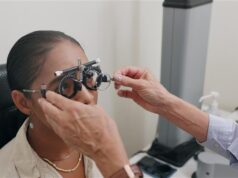
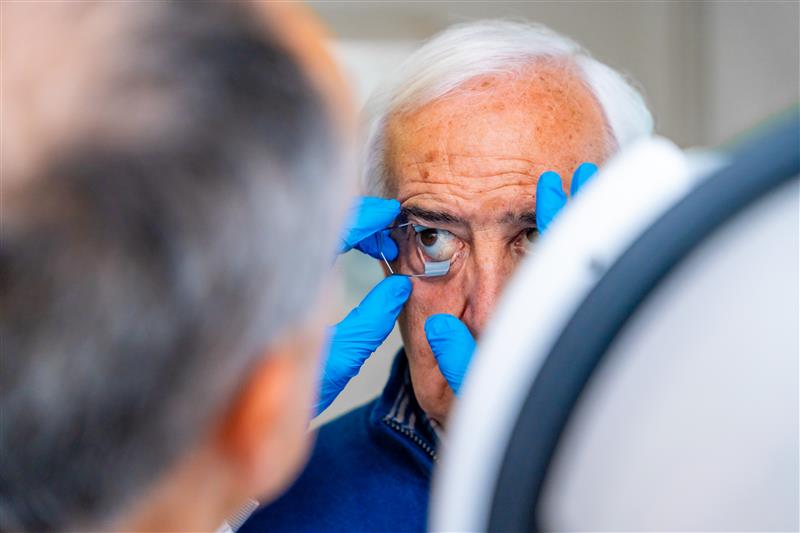
- Integrating targeted screening into current programmes: Instead of sporadic eye camps, government schemes must make it mandatory for high-risk individuals to undergo screening by integrating it into current screening programmes for cataracts and non-communicable diseases. The focus must be on those above 40, suffering from comorbidities such as diabetes or hypertension, and with a history of glaucoma. For screening, low-cost tools such as non-contact tonometers can be procured by the government or through private-public partnerships to ensure even smaller health centres have the necessary equipment.
- Strengthening the workforce: Providing certified and standardised training to conduct basic screening in primary health centres can solve the problem of the lack of professionals. Furthermore, utilising technology can also bridge gaps. For instance, images captured at a smaller rural centre can be sent to a specialist in a bigger district hospital for remote diagnosis and management guidance.
- Subsidise treatment: Since treatment for glaucoma is continuous, it is necessary to adopt measures to ensure high-quality medications are provided free of cost or are heavily subsidised through government pharmacies and wellness centres to improve access. Furthermore, it is necessary to create a dedicated glaucoma care package under government schemes that covers surgery, the cost of medications throughout, and the mandatory diagnostic tests.
India has already proven that focused policy can transform public health and its success in tackling cataract blindness stands as a global example. It is now time to bring the same resolve to glaucoma. Unlike cataract, this condition cannot be cured with a single surgery; it demands sustained care, consistent monitoring, and lifelong access to treatment. A national glaucoma policy that mandates routine screening, subsidises long-term medication, and integrates eye health into primary care would not only preserve sight but also protect livelihoods. After all, every case of preventable blindness is an economic loss and a human one. By investing in prevention today, India can safeguard both its vision and its vision for the future.
[1]https://pmc.ncbi.nlm.nih.gov/articles/PMC10229968/
[3]https://pmc.ncbi.nlm.nih.gov/articles/PMC10229968/
[4]https://pmc.ncbi.nlm.nih.gov/articles/PMC8986354/